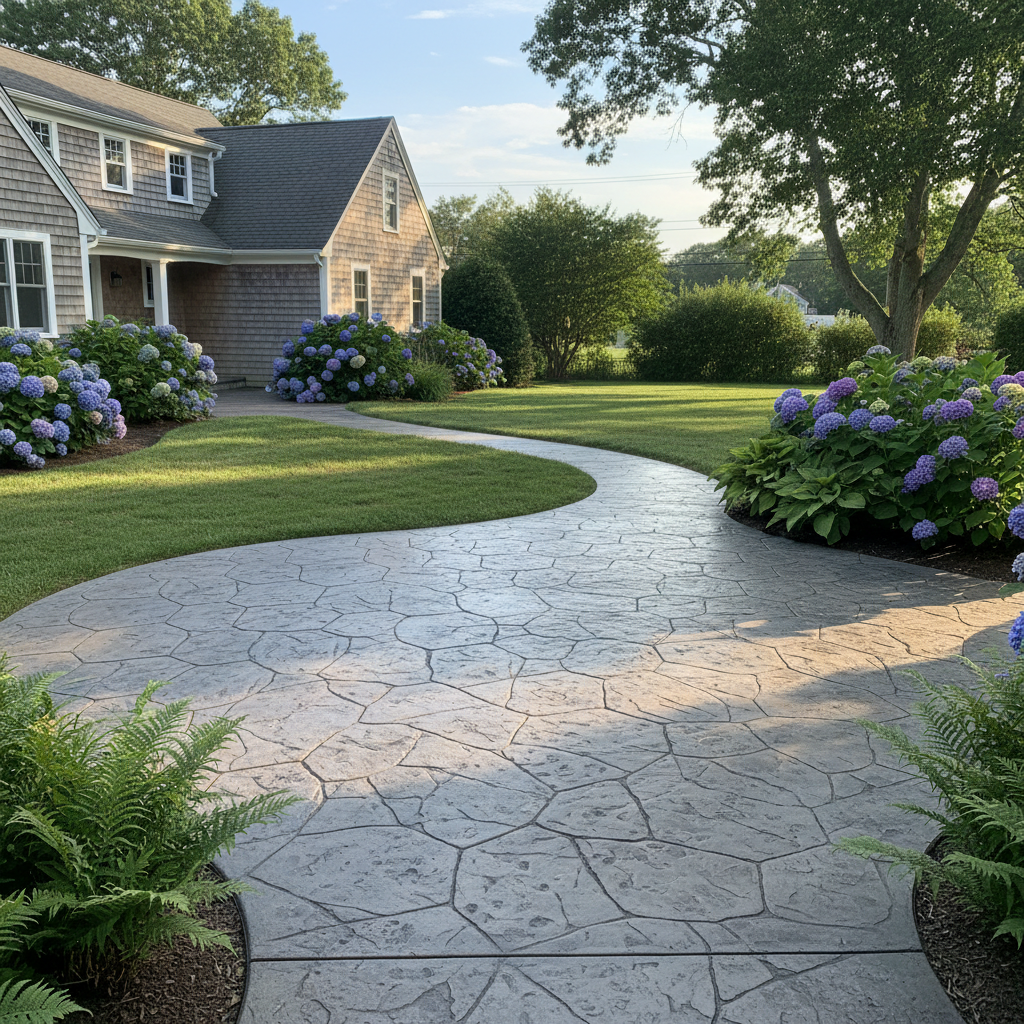
You're thinking about a stamped concrete patio, walkway, or driveway, right? It's a great choice for adding curb appeal and functionality, especially around here where we get all four seasons hitting our outdoor spaces pretty hard. But I've seen my fair share of projects go sideways, and it's almost always because folks didn't know what to look for or what questions to ask. Let's talk about the biggest mistakes I see homeowners in Saunderstown make when it comes to stamped concrete.
Mistake #1: Focusing Solely on the Lowest Bid
Look, everyone wants a good deal. I get it. But with concrete, especially stamped concrete, the lowest bid is almost never the best deal in the long run. There's a reason some quotes are significantly lower than others. It usually means they're cutting corners somewhere – maybe on the prep work, the quality of the concrete mix, the amount of rebar or wire mesh, or the sealing process. Good concrete work isn't cheap, and cheap concrete work isn't good. You'll end up paying more down the road to fix cracks, spalling, or color issues if you go with the cheapest guy. Always ask for a detailed breakdown of what's included in the bid. If it's vague, that's a red flag.
Mistake #2: Skipping Proper Site Preparation
This is huge, and it's where a lot of those low-bid guys skimp. Proper site prep is the foundation of a long-lasting concrete slab. Around Saunderstown, especially in those areas closer to the water or with a lot of clay in the soil, you can't just pour concrete on unprepared ground. You need proper excavation, a well-compacted sub-base (usually gravel), and good drainage. If the ground isn't stable, your concrete will crack. It's not a matter of if, but when. Make sure your contractor talks about compaction, base material, and grading for water runoff. If they don't, ask them directly. It's non-negotiable for a durable job.
Mistake #3: Not Understanding the Sealing Process
Stamped concrete isn't just poured and left. It needs to be properly sealed. This is critical for protecting the color, preventing stains, and extending the life of your investment. I've seen jobs where the sealer was applied incorrectly, or a cheap, incompatible sealer was used, leading to cloudy patches, peeling, or a dull finish. And it's not a one-and-done thing; stamped concrete needs to be re-sealed periodically, usually every 2-3 years depending on traffic and exposure. Ask your contractor what kind of sealer they use, how many coats they apply, and what their recommendations are for future maintenance. A good contractor, like us at Flatwork Concrete Finishing Services of Rhode Island, will educate you on this.
Mistake #4: Ignoring Expansion Joints and Control Joints
Concrete cracks. It's a fact of life. The goal isn't to prevent all cracks, but to control where they happen. That's what expansion joints and control joints are for. Expansion joints allow the concrete to expand and contract with temperature changes without pushing against other structures. Control joints are strategically placed cuts that encourage cracks to form along a neat line, rather than randomly across your beautiful new patio. If a contractor doesn't plan for these, or tries to skimp on them, you're going to end up with ugly, random cracks that compromise the look and integrity of your slab. This is basic concrete science, and any good pro knows it.
Mistake #5: Not Checking References or Portfolios
It sounds obvious, but you'd be surprised how many people don't do this thoroughly. Don't just take a contractor's word for it. Ask to see examples of their stamped concrete work, ideally projects that are a few years old so you can see how they've held up. Talk to previous clients. Ask about their experience with the contractor's communication, timeliness, and professionalism. A reputable contractor will be happy to provide references and show off their work. If they hesitate, that's a huge red flag.
Doing your homework upfront can save you a lot of headaches and money down the road. Stamped concrete is a fantastic addition to any home, but only if it's done right. Be smart, ask questions, and don't settle for less than quality work.