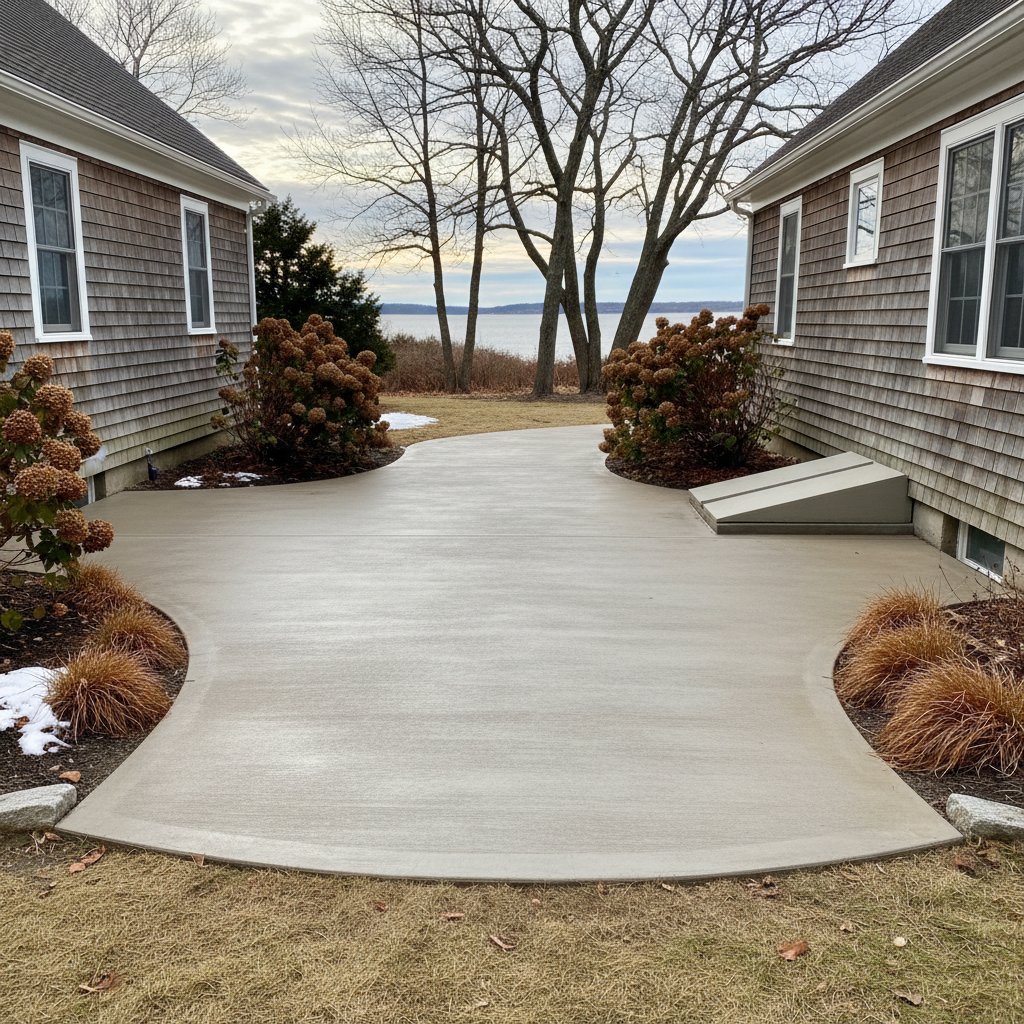
Pouring concrete right here in Saunderstown requires keeping a close eye on the calendar and the skies. Coastal Rhode Island weather brings plenty of challenges, from damp and chilly springs to blazing summer afternoons and hard winter freezes. If you want your driveway, patio, or walkway to last, timing is everything.
Our local climate demands careful planning. Down near the bay, moisture and fluctuating temperatures play a massive role in how concrete cures and ages. Flatwork Concrete Finishing Services of Rhode Island reminds property owners that you cannot just pour a slab on any random day and hope for the best.
Best Windows for Scheduling Installation
Spring and fall are prime times for flatwork, but you have to watch out for lingering cold snaps. Late spring gives the ground time to settle after winter, while early fall offers warm days and cooler nights that let the mix cure slowly and evenly. Summer pours are also possible, but a scorching July day with high humidity will dry your surface too fast before it has time to gain proper strength. Flatwork Concrete Finishing Services of Rhode Island adjusts water-to-cement ratios and uses retarders when the heat spikes.
- Late spring offers stable temperatures once the overnight frost threat disappears.
- Early fall provides ideal curing conditions without extreme heat stress.
- Winter requires heavy ground blankets and heated enclosures, which add cost and complexity.
Battling the Freeze-Thaw Cycle
Winter in Washington County is tough on masonry and flatwork alike. When moisture gets trapped inside porous concrete and freezes, it expands. That is how cracks start spreading across your property. Flatwork Concrete Finishing Services of Rhode Island always mixes air-entrained concrete for local jobs to give microscopic pockets for water to expand safely without tearing the slab apart. Skipping this step in our climate is a fast track to replacement.
Year-Round Protection Tips
Protecting your concrete does not stop once the forms come off. Seal your concrete every 2 to 3 years to keep out moisture and road salt if you live near treated coastal roads. Come winter, do not use metal shovels and harsh chemical de-icers. Use plain sand or pet-safe ice melt instead. A little preventive maintenance goes a long way toward keeping your flatwork solid for 15 to 20 years or more.