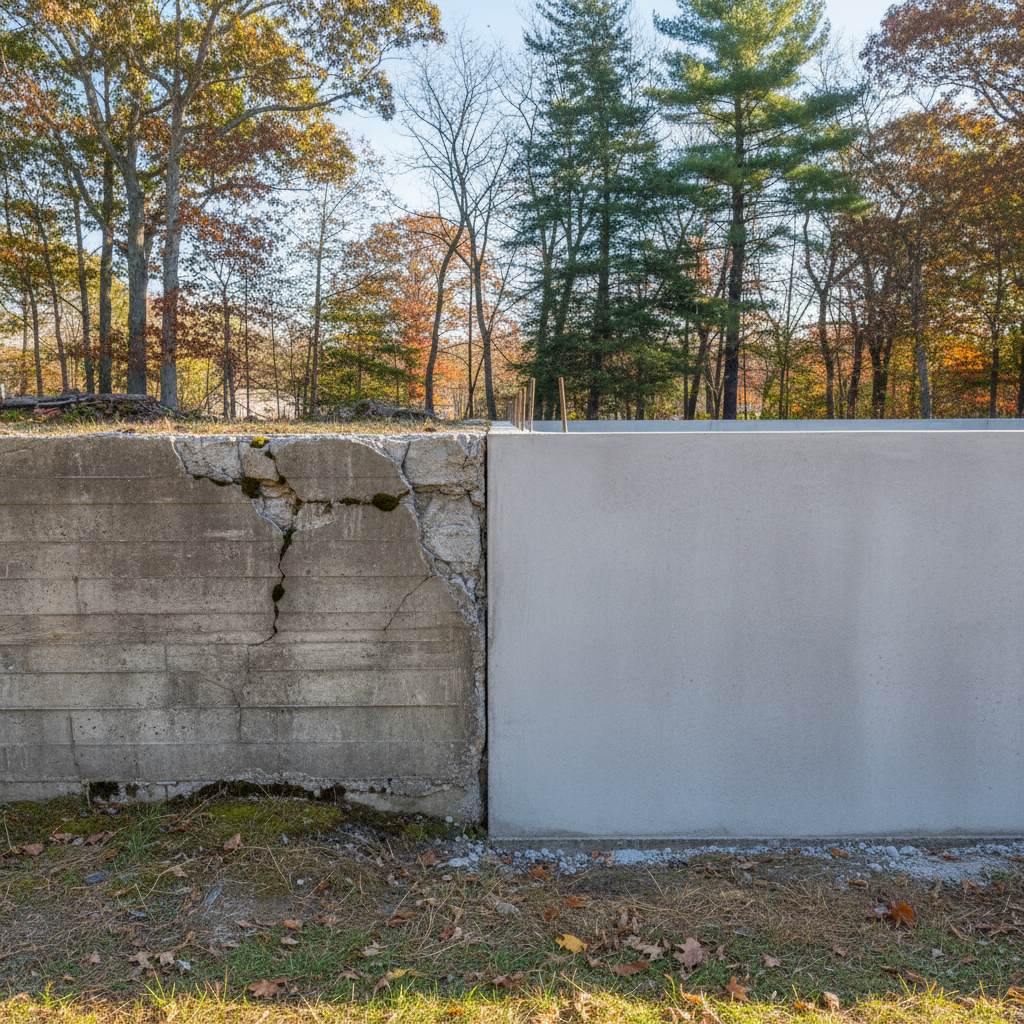
Building a new home or adding an extension here in Saunderstown? You've got some big decisions to make, and one of the most fundamental is your foundation. It's literally what everything else rests on, so you want to get it right. Homeowners often ask me about the difference between a concrete slab foundation and a traditional full foundation (meaning a basement or a crawl space). Let's talk about what each one brings to the table, especially for us here in coastal Rhode Island.
Slab-on-Grade Foundations: Simple & Direct
A slab-on-grade foundation is pretty much what it sounds like: a big, thick concrete pad poured directly on the ground. The edges are usually thicker, forming an integral footing that supports the exterior walls. Sometimes there are trenches dug for deeper footings too, depending on the design and soil conditions.
The Good Stuff About Slabs:
- Cost: Generally, slabs are cheaper to build upfront. You're using less concrete overall compared to a full foundation, and there's less excavation involved. This can be a big draw for folks watching their budget.
- Speed: They're quicker to pour and cure. You can get to framing faster, which means your project moves along.
- No Basement Worries: You won't have to deal with basement flooding or moisture issues that can plague traditional basements, especially in areas like ours with a high water table or near the salt pond.
- Energy Efficiency: A well-insulated slab can be very energy efficient, as there's no air circulating underneath.
The Not-So-Good Stuff About Slabs:
- Access to Utilities: This is a big one. All your plumbing and electrical lines are embedded in the concrete. If you have a leak or an electrical problem underground, fixing it means breaking up the slab. That's a messy, expensive job.
- No Extra Space: You lose out on the storage, mechanical space, or potential living area a basement provides.
- Cracking: While modern techniques minimize it, concrete can crack. If the ground settles unevenly, you might see issues.
- Cold Floors: Without proper insulation, slabs can feel cold underfoot, especially in our winters.
Full Foundations (Basements/Crawl Spaces): The Traditional Route
When I talk about a full foundation, I'm usually referring to a poured concrete wall system that creates either a full basement or a crawl space beneath the house. These walls sit on footings that go below the frost line, which is critical here in New England.
The Good Stuff About Full Foundations:
- Extra Space: This is the main advantage. A basement gives you tons of storage, a place for your furnace and water heater, and potential for future finished living space. A crawl space, while not for living, still offers easy access for maintenance.
- Easy Utility Access: Plumbing, electrical, and HVAC runs are all accessible in the basement or crawl space. Repairs are much simpler and less destructive.
- Flexibility: Want to add a bathroom downstairs later? Much easier with a basement.
- Resale Value: In many markets, including ours, homes with basements often command a higher resale value due to the added utility and potential.
The Not-So-Good Stuff About Full Foundations:
- Cost: They're more expensive upfront. More excavation, more concrete for the walls, and more labor.
- Moisture Issues: Basements are notorious for moisture problems, especially in our humid summers and with our coastal water table. You'll need good drainage, waterproofing, and possibly a dehumidifier.
- Longer Build Time: More steps mean a longer construction schedule.
- Radon: This is a concern in some areas of Rhode Island. Basements can be more susceptible to radon gas intrusion, requiring mitigation.
So, What's My Recommendation for Saunderstown?
Look, I've poured a lot of concrete in this town, from new builds in Bonnet Shores to renovations down by the Narrow River. For most homeowners in Saunderstown, I'm going to lean towards a full foundation with a basement or at least a good, accessible crawl space.
Here's why:
- Our Weather: We get plenty of rain, snow, and humidity. While basements need attention to waterproofing, the ability to get utilities out of the slab and deal with them easily is a huge plus when things inevitably need maintenance or repair.
- Value & Space: That extra space is invaluable. Whether it's for storage, a workshop, or a future finished room, it adds significant value and functionality that a slab just can't provide.
- Utility Access: I can't stress this enough. Having your plumbing and electrical runs accessible in a basement or crawl space saves you a massive headache and expense down the road. Imagine a burst pipe under your kitchen floor if it's a slab. Not fun.
- Frost Line: Our frost line means footings need to go deep anyway. You're already digging a good bit, so extending that to create a basement often makes sense.
Now, if you're building a small shed, a detached garage, or maybe a very simple, small addition where budget and speed are absolutely paramount, a slab can be a perfectly fine choice. But for your main living space, especially in a place like Saunderstown where properties hold their value and extra space is always a bonus, a full foundation is usually the smarter, more practical long-term investment.
Whatever you decide, make sure you're working with experienced folks who know our local conditions. Flatwork Concrete Finishing Services of Rhode Island can help you get your foundation right, no matter which route you choose. Give me a call, and we can talk through your specific project.