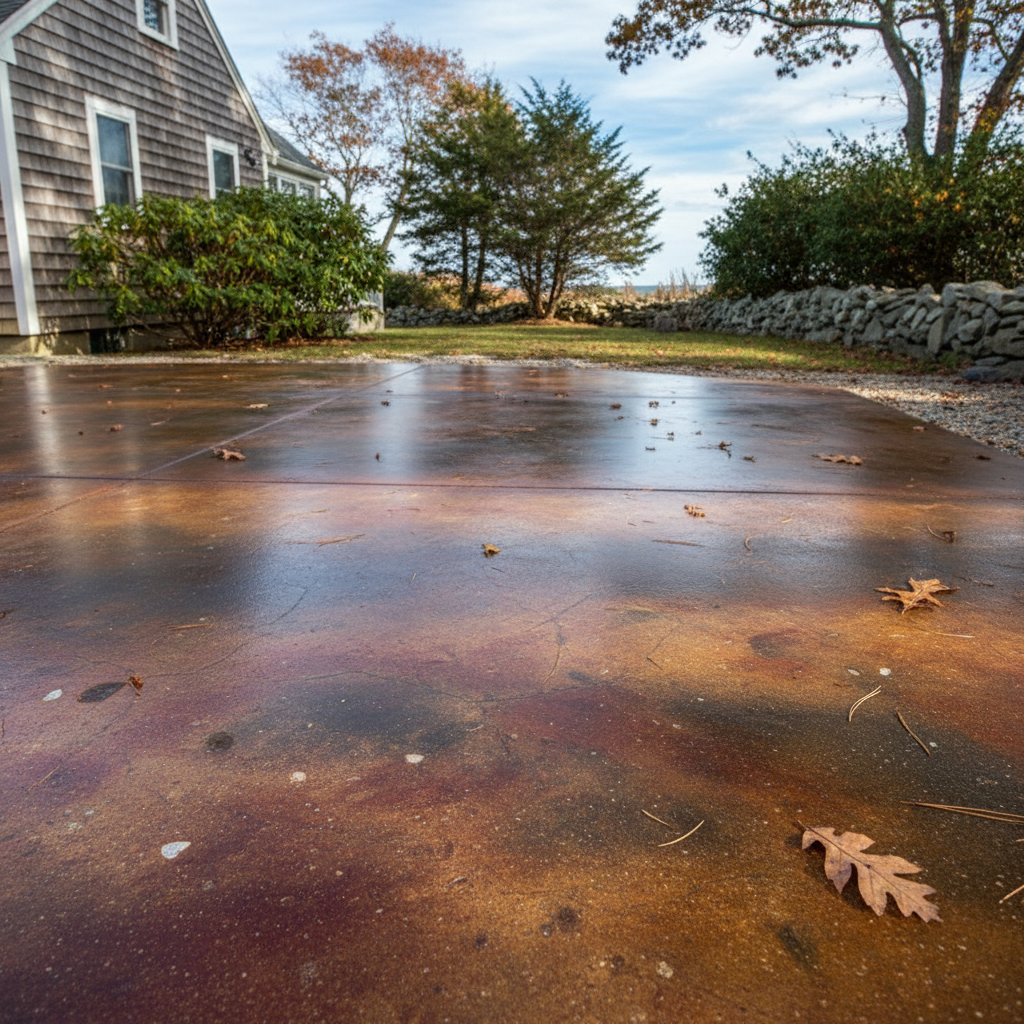
So, you're staring at that plain concrete slab, maybe thinking, "You know, I could really make that pop with some stain." And you'd be right! Concrete staining can truly transform a space, whether it's an old patio, a basement floor, or even a garage. But hold on a sec before you grab that sprayer. Let's talk about what you're actually getting into. I've seen plenty of DIY staining jobs over the years – some look fantastic, others... well, let's just say they needed a total do-over.
Before You Start: Prep is Everything
Seriously, this is the point where most DIY projects go completely sideways. You can't just slop stain onto dirty concrete. You've got to clean it, and I mean really clean it. For outdoor surfaces, especially around here in Saunderstown where we deal with all that salt air and sometimes a pesky green algae buildup, you'll definitely need a good pressure washer. For indoor floors, a stiff brush and a degreaser will be your best friends. Any oil, grease, paint, or old sealer will stop the stain from soaking in evenly, and then you'll end up with splotches. Trust me on this one: nobody wants splotches.
Once it's clean, you have to let it dry completely. And I'm talking bone dry. If there's any moisture at all, especially when you're working with acid stains, you're just asking for trouble. After that, patch up any cracks or divots. You can use a concrete repair compound, but remember, the stain will probably highlight these repairs, not hide them. If your concrete has major cracks, staining might not be the best first step; you might need more serious repair work or even a resurfacing before anything else.
Choosing Your Stain: Acid vs. Water-Based
This is a pretty big decision, actually. Here's the basic rundown:
- Acid Stains: These stains actually react chemically with the lime in your concrete. They create a translucent, mottled look, kind of like natural stone. Think earthy tones – browns, greens, maybe some blues. You won't get a solid, opaque color with these. The final color is also a bit unpredictable because it depends on the concrete's specific makeup, which can even change across one slab. This is where things can get tricky for DIYers. If you're aiming for a very particular shade, an acid stain might leave you disappointed.
- Water-Based Stains: These are generally easier to manage. They don't react chemically; they just penetrate the surface. You'll find a much wider range of colors, and the results are usually more consistent. You can even layer them to create different effects. If you're after a more uniform color or a brighter hue, water-based is probably your better bet for a DIY project.
Always, always do a test patch in a spot no one will see. Always. This isn't optional. It'll show you exactly how the stain will look and how much coverage you'll get.
The Application Process: Slow and Steady
Whether you're using acid or water-based, the application method is pretty similar. You'll need a sprayer – a plastic pump sprayer usually works fine for water-based, but for acid, you need one specifically made for chemicals. Don't even think about using a metal sprayer for acid stain; it'll corrode almost immediately. Apply the stain in thin, even coats. Overlapping is okay, but try to avoid puddling. If you do get puddles, spread them out right away. For acid stains, you'll need to neutralize the acid after it's done reacting, usually with an ammonia and water solution, then rinse everything thoroughly. Water-based stains typically don't require any neutralization.
Wear your protective gear, too: gloves, eye protection, and a respirator, especially with acid stains or if you're working in a poorly ventilated spot like a basement. You really don't want to breathe that stuff in.
Sealing the Deal: Don't Skip This Step
Once the stain is completely dry (and neutralized and rinsed if it was acid), you absolutely, positively have to seal it. The sealer protects the stain from wear, UV rays, and moisture. It also makes the color pop. There are different types of sealers out there – acrylic, epoxy, urethane. For outdoor surfaces, you'll want something tough enough to handle our unpredictable New England weather. For indoor areas, think about how much foot traffic it'll get. Apply the sealer in thin, even coats, just like you did the stain. Two coats are usually better than one. Let each coat dry completely before you put on the next one.
When to Call a Pro (Like Us)
Look, I'm all for homeowners tackling projects themselves, but there are definitely times when it just makes sense to bring in the cavalry. If your concrete is in really bad shape, has a lot of existing coatings, or if you're trying to get a very specific, intricate design, that's probably a job for us. If you're staining a huge area, like an entire driveway, or if you're just not comfortable handling chemicals, give us a call. We've got the specialized equipment, the experience, and the right products to get you a consistent, professional finish. We've been doing this for years at Flatwork Concrete Finishing Services of Rhode Island, and we've truly seen it all. Sometimes, trying to save a few bucks on a DIY project ends up costing more in the long run if you have to fix mistakes. For a small patio or a utility room floor, you can probably handle it. For anything bigger or more complex, though, it's definitely worth getting a quote.
Aftercare: Keep It Looking Good
Once your stained concrete is sealed, it's actually pretty low maintenance. Clean it regularly with a mild, pH-neutral cleaner. Avoid harsh chemicals or abrasive scrubbers, especially on sealed surfaces; they can damage the sealer. Reapply sealer every few years, depending on how much wear and tear it gets. Outdoor surfaces will need it more often than indoor ones, naturally. Just keep an eye on it; if it starts to look dull or worn, it's time for a fresh coat.
Stained concrete is a fantastic way to add character and value to your home. Just go into it with your eyes open, do your homework, and don't be afraid to ask for help if you need it.