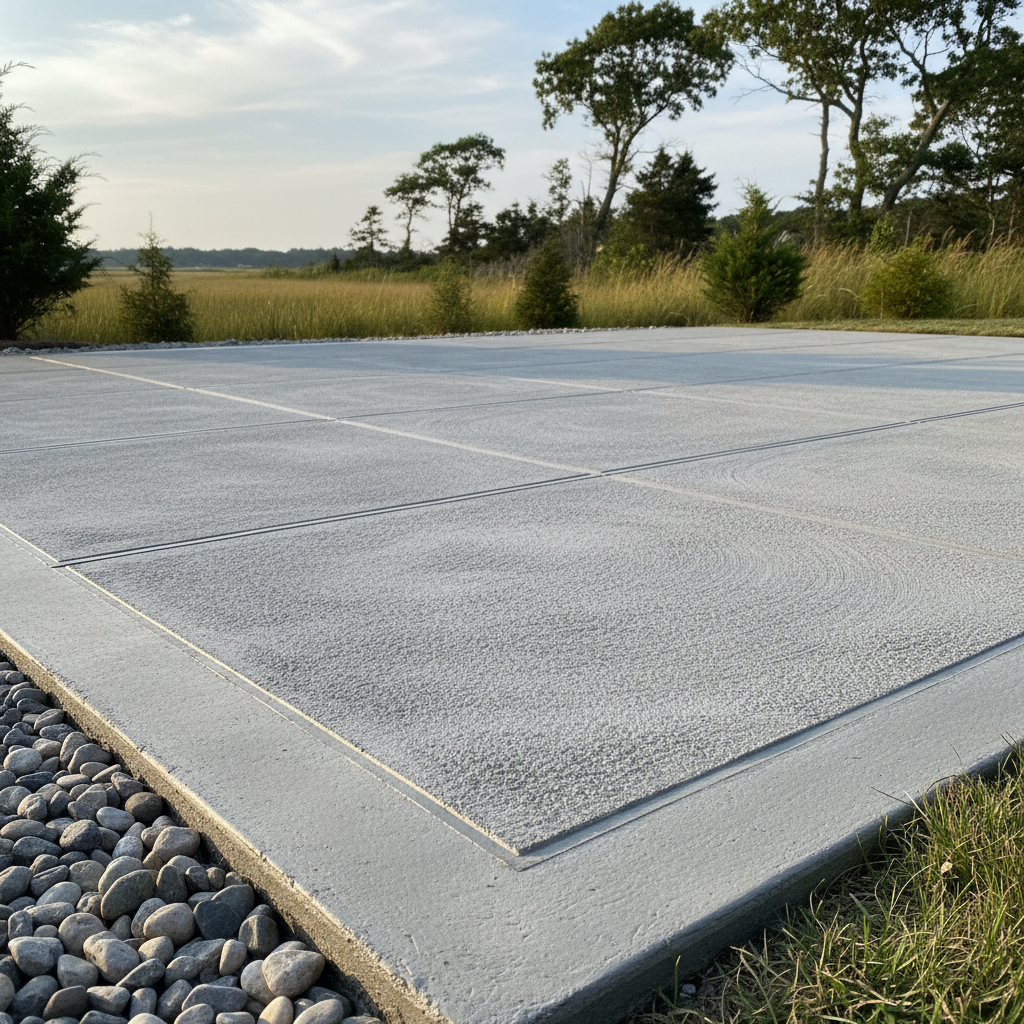
Pouring concrete looks simple on television, but reality hits hard once that truck rolls down your driveway. If you live down by Narragansett Bay or further up toward Gilbert Stuart's birthplace, you already know our coastal Rhode Island weather and damp soil conditions do not forgive sloppy prep work. Here is how to break down a concrete project, what you can handle yourself, and when it is time to bring in the crew from Flatwork Concrete Finishing Services of Rhode Island.
Before the Pour: Prep Work and Planning
Getting ready for concrete is ninety percent of the battle. You cannot just dump mud on top of whatever dirt is sitting in your yard and hope for the best. Down here, we deal with a lot of heavy clay and sandy loam mix depending on how close you are to the water, which means frost heaves can wreck a shallow pad in no time.
Here is what you can tackle on your own:
- Marking out the layout with stakes and mason's string to check your square.
- Digging out the area to the proper depth, usually about four to six inches for a standard patio or walkway.
- Hauling in and compacting gravel sub-base material with a rented plate compactor.
Do not skimp on that gravel layer. If your base is not packed solid, your brand new slab will crack the first time a heavy freeze hits Saunderstown.
During the Pour: Managing the Mud
When the ready-mix truck shows up, the clock starts ticking immediately. Concrete does not wait for you to figure out your next move. This is where most DIYers get into deep trouble. Moving three yards of concrete with shovels and wheelbarrows is exhausting, backbreaking work, and you only have a narrow window before it starts setting up.
You can probably handle wheeling the concrete into place if you have two or three strong friends helping out. Screeding it flat using a straight 2x4 board takes some muscle, but a determined homeowner can pull it off for a small backyard pad.
Leave the actual finishing to the professionals. Troweling, edging, and getting the right surface texture require a skilled hand and specific tools. If you miss your window or over-work the surface, you will end up with scaling, dusting, or a birdbath holding rainwater right outside your back door.
After the Pour: Curing and Care
Once the concrete is placed and finished, your job is not over. Concrete does not actually dry; it cures through a chemical reaction that needs moisture to reach maximum strength.
Keep these points in mind for the days following the install:
Spray the slab down with a gentle mist of water a couple of times a day for at least five to seven days, or cover it with heavy plastic to trap the moisture. Stay off it with heavy furniture for a week, and hold off on parking vehicles on a new driveway for at least a full month. If you slap down salt or de-icers during our messy coastal winter storms too early, the surface will pit and flake apart. Give it time to harden properly.
Taking on a concrete project yourself can save a few bucks, but knowing your limits keeps your property looking sharp for decades.